
 PCB
PCB FPC
FPC Rigid-Flex
 FR-4
FR-4 HDI PCB
 Rogers High-Frequency Board
 PTFE Teflon High-Frequency Board
 Aluminum
 Copper Core
 PCB Assembly
 LED light PCBA
 Memory PCBA
 Power Supply PCBA
 New Energey PCBA
 Communication PCBA
 Industrial Control PCBA
 Medical Equipment PCBA
 Testing Service
 PCBA Testing Service
 Certification Application
 RoHS Certification Application
 REACH Certification Application
 CE Certification Application
 FCC Certification Application
 CQC Certification Application
 UL Certification Application
 Transformers, Inductors
 High Frequency Transformers
 Low Frequency Transformers
 High Power Transformers
 Conversion Transformers
 Sealed Transformers
 Ring Transformers
 Inductors
 Wires,Cables Customized
 Network Cables
 Power Cords
 Antenna Cables
 Coaxial Cables
 Net Position Indicator
 Solar AIS net position indicator
 Capacitors
 Connectors
 Diodes
 Embedded Processors & Controllers
 Digital Signal Processors (DSP/DSC)
 Microcontrollers (MCU/MPU/SOC)
 Programmable Logic Device(CPLD/FPGA)
 Communication Modules/IoT
 Resistors
 Through Hole Resistors
 Resistor Networks, Arrays
 Potentiometers,Variable Resistors
 Aluminum Case,Porcelain Tube Resistance
 Current Sense Resistors,Shunt Resistors
 Switches
 Transistors
 Power Modules
 Isolated Power Modules
 AC-DC Power Modules
 DC-AC Module(Inverter)
 RF and Wireless
Comprehensive Analysis of PCB Surface Treatment Technologies: An Overview of 8 Common Methods
Comprehensive Analysis of PCB SuRFace Treatment Technologies: An Overview of 8 Common Methods
With the rapid development of technology, the quality requirements for PCB (Printed Circuit Board) have become increasingly stringent, whICh has also driven the continuous development and upgrading of PCB surface treatment technologies. This article will introduce you in detail to the 8 common PCB surface treatment technologies currently available in the market, helping you better understand this field.
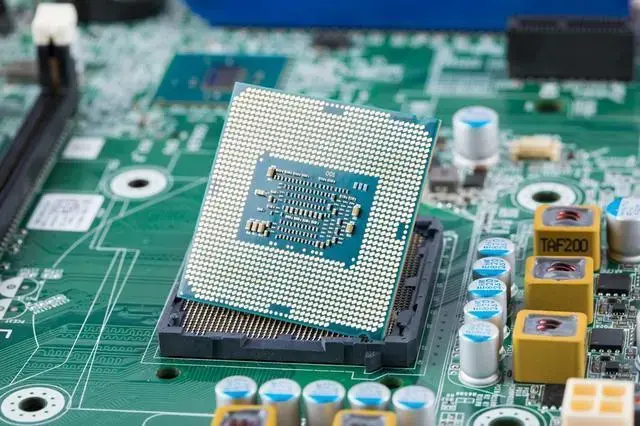
What is PCB Surface Treatment Technology?
PCB surface treatment technology is a process method that forms a surface layer with different mechanical, physical, and chemical properties from the substrate on the PCB components and electrical connection points. This surface layer aims to ensure that the PCB has good solderability and electrical performance. Since copper tends to exist in the form of oxides in the air, seriously affecting the solderability and electrical performance of the PCB, it is therefore essential to perform surface treatment on the PCB.
Common PCB Surface Treatment Technologies
Organic Solderability Preservatives (OSP)
OSP is a PCB copper foil surface treatment process that complies with RoHS directives. It forms an organic protective film (also known as organic solderability preservative or copper protector) on the clean bare copper surface through chemical methods to prevent copper oxidation. This protective film can be easily removed by flux at high welding temperatures, allowing the exposed clean copper surface to quickly bond with molten solder to form a strong solder joint.
Hot Air Leveling (HAL)
Hot air leveling is a process that coats the PCB surface with molten tin (lead) solder and flattens it with heated compressed air. It forms a coating that is both resistant to copper oxidation and provides good solderability. During hot air leveling, a copper-tin intermetallic compound is formed at the junction of the solder and copper, giving the PCB good welding performance.
Immersion Gold
Immersion gold involves coating the copper surface with a thick layer of nickel-gold alloy that has excellent electrical properties. This process provides long-term protection for the PCB and has excellent environmental tolerance. Immersion gold also prevents the dissolution of copper, which is beneficial for lead-free assembly. However, it has higher costs, poor welding strength, and the nickel layer can oxidize over time.
Immersion Silver
Immersion silver is a surface treatment technology that lies between OSP and chemical nickel/immersion gold. It has a simpler and faster process. It provides good electrical performance and maintains good solderability in hot, humid, and polluted environments, but it loses its shine. Since there is no nickel under the silver layer, immersion silver does not have the good physical strength of chemical nickel/immersion gold.
Immersion Tin
The immersion tin process is specifically designed for SMT and chip packaging. It chemically deposits a tin metal coating on the copper surface, which is an environmentally friendly new process that replaces the Pb-Sn alloy coating process. It has been widely used in the surface treatment of electronic products (such as circuit boards and electronic devices) as well as hardware parts and decorations.
Nickel-Gold
Chemical Nickel-Gold: Coats the copper surface with a thick layer of nickel-gold alloy with excellent electrical properties to provide long-term protection for the PCB and achieve good electrical performance during long-term use.
Electroplated Nickel-Gold: First electroplates a layer of nickel and then a layer of gold onto the PCB surface conductors. The nickel plating mainly prevents the diffusion between gold and copper. There are two types of electroplated nickel-gold: soft gold and hard gold. Soft gold is mainly used for gold wire bonding during chip packaging, while hard gold is mainly used for electrical interconnection in non-welding areas.
Tin-Coating (with Lead and Lead-Free Options)
Tin-Coating with Lead: Tin is formulated in a certain proportion with lead, which enhances the activity of tin wire during welding. However, lead is toxic and harmful to humans, and it is not environmentally friendly.
Lead-Free Tin-Coating: An environmentally friendly process that is less harmful to humans. The lead content in lead-free tin does not exceed 0.5%. Lead-free tin has a higher melting point, making the solder joints much stronger. Essentially, tin-coating with lead and lead-free tin-coating are the same process, but with different lead purity levels. Lead-free tin is more environmentally friendly and safer for humans and the environment, representing a future trend. It is recommended to use lead-free tin.
Through the above introduction, you should have a deeper understanding of PCB surface treatment technologies. In practical applications, the appropriate surface treatment technology should be selected based on specific needs and conditions to ensure the quality and performance of the PCB.
Minintel can provide customized components according to specific customer requirements. We specialize in providing PCBprototypes and bulk assembly. Our turnkey services include PCB manufacturing, component procurement, PCB assembly prototyping, and Pcb Testing. At Minintel, a variety of first-class equipment and strict quality control system help us provide you with high-quality products!