
 PCB
PCB FPC
FPC Rigid-Flex
 FR-4
FR-4 HDI PCB
 Rogers High-Frequency Board
 PTFE Teflon High-Frequency Board
 Aluminum
 Copper Core
 PCB Assembly
 LED light PCBA
 Memory PCBA
 Power Supply PCBA
 New Energey PCBA
 Communication PCBA
 Industrial Control PCBA
 Medical Equipment PCBA
 Testing Service
 PCBA Testing Service
 Certification Application
 RoHS Certification Application
 REACH Certification Application
 CE Certification Application
 FCC Certification Application
 CQC Certification Application
 UL Certification Application
 Transformers, Inductors
 High Frequency Transformers
 Low Frequency Transformers
 High Power Transformers
 Conversion Transformers
 Sealed Transformers
 Ring Transformers
 Inductors
 Wires,Cables Customized
 Network Cables
 Power Cords
 Antenna Cables
 Coaxial Cables
 Net Position Indicator
 Solar AIS net position indicator
 Capacitors
 Connectors
 Diodes
 Embedded Processors & Controllers
 Digital Signal Processors (DSP/DSC)
 Microcontrollers (MCU/MPU/SOC)
 Programmable Logic Device(CPLD/FPGA)
 Communication Modules/IoT
 Resistors
 Through Hole Resistors
 Resistor Networks, Arrays
 Potentiometers,Variable Resistors
 Aluminum Case,Porcelain Tube Resistance
 Current Sense Resistors,Shunt Resistors
 Switches
 Transistors
 Power Modules
 Isolated Power Modules
 AC-DC Power Modules
 DC-AC Module(Inverter)
 RF and Wireless
Detailed Preventive Measures for Conductive Anodic Filament (CAF) Failure
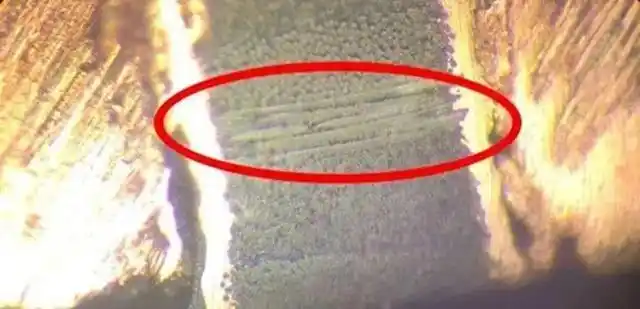
Conductive AnodIC Filament (CAF) is a serious reliability failure mechanism in Printed Circuit Boards (PCBs). It refers to the migration of metal ions (primarily copper ions) along the inteRFace between the glass fiber and the resin, or through the resin itself, under the combined influence of an electric field and moisture, forming conductive filaments from the anode to the cathode. This eventually leads to a decrease in insulation resistance or even a short circuit. CAF typically occurs in environments with high voltage gradients and high humidity, posing significant risks to high-frequency/high-speed circuits, high-voltage power supplies, and devices intended for long-term operation. Preventing CAF requires systematic measures across four dimensions: materials, design, process, and quality control.
I. Material Selection: Building Innate Immunity
-
Select High CAF-Resistant Substrates
-
Prioritize laminate substrates explicitly labeled as "High CAF Resistance," "Low CAF," or "CAF Resistant".
-
These materials achieve this by optimizing the interfacial bond between the glass fiber and resin, for example:
-
Coupling Agent Treatment: Using special silane coupling agents to treat the glass fiber surface, significantly enhancing the resin-to-glass bond and blocking ion migration paths.
-
Glass Fabric Innovation: Using Spread Glass Fiber or low-profile copper foil reduces voids within the fiber bundles, allowing more complete resin impregnation.
-
-
For high-reliability products (e.g., communication base stations, automotive electronics), these materials should be prioritized even at a higher cost.
-
-
Optimize the Resin System
-
Choose resin systems with low moisture absorption and a high Glass Transition Temperature (Tg), such as modified epoxy, benzoxazine, PPO, or BT resin. A high Tg usually indicates a denser cross-linked network, better resisting moisture ingress and ion migration.
-
-
Use High-Purity Materials
-
Ensure that auxiliary materials like prepreg and solder mask have low ionic iMPUrity content (especially chloride and bromide ions), as these impurities can act as electrolytes and accelerate the ion migration process.
-
II. PCB Design: Eliminating Potential Failure Risks
Meticulous design is the most cost-effective and powerful means of CAF prevention.
-
Increase Conductor Spacing
-
Hole-to-Hole Spacing (Plating Barrel to Plating Barrel): This is a high-risk area for CAF. For high-voltage or high-density boards, sufficient hole spacing is mandatory. A rule of thumb is a minimum hole spacing of 3 times the board thickness. For example, for a 1.6mm thick board, the minimum hole spacing should be ≥0.5mm (20mil).
-
Trace-to-Trace Spacing: Similarly, safe spacing rules must be followed, especially for adjacent traces at different potentials.
-
-
Optimize Hole and Routing Layout
-
Avoid arranging vias of different potentials in tightly packed arrays.
-
During routing, avoid long parallel runs, especially between traces with a high voltage difference.
-
-
Implement Effective Grounding and Shielding
-
Placing guard rings or ground planes between sensitive circuits or areas with high potential differences can effectively block potential CAF growth paths.
-
In multilayer boards, make full use of ground and power planes for isolation.
-
-
Employ Back Drilling (Depth-Controlled Drilling)
-
For through-holes in high-frequency/high-speed boards, the unused plated copper stub can create antenna effects and increase CAF risk. Using back drilling to remove these redundant sections significantly improves reliability.
-
III. Manufacturing Process: Forging a Reliable Barrier
Excellent manufacturing processes can compensate for limitations in materials and design.
-
Strictly Control Drilling Quality
-
Use sharp drill bits and optimized drilling parameters to prevent smearing, burrs, or glass fiber pull-out on the hole wall. A rough hole wall creates a natural path for ion migration.
-
For boards with high aspect ratios, consider peck drilling or step drilling to reduce defects.
-
-
Ensure Hole Metallization Quality
-
Desmearing and Etchback: Before electroless copper deposition, it is essential to thoroughly remove drill smear from the hole wall using chemical methods (e.g., permanganate) or plasma, and create a slight micro-etchback (1-3μm). This allows the copper layer to "anchor" into the glass-resin interface rather than just covering the surface.
-
Plated Copper Uniformity: Ensure the hole wall copper plating is uniform, dense, and free of voids or cracks. Weak plating is prone to cracking under thermal stress, forming new CAF paths.
-
-
Optimize Lamination Process
-
Use vacuum lamination to ensure the resin flows adequately and completely fills the gaps in the glass fabric, eliminating interlayer voids.
-
Strictly follow the parameters (temperature, pressure, time) provided by the material supplier for lamination to ensure complete curing.
-
-
Enhance Cleaning and Drying
-
Perform thorough rinsing after each wet process in PCB manufacturing to remove chemical residues.
-
The final product must be completely dried to remove absorbed moisture. For high-reliability products, baking (e.g., 125°C, 6-8 hours) is recommended.
-
IV. Quality Control and Testing: Verifying Prevention Effectiveness
-
CAF-Specific Testing
-
Conduct CAF accelerated life testing on coupons or finished boards according to standards like IPC-TM-650 2.6.25. This typically involves testing for hundreds or thousands of hours under high temperature/humidity (e.g., 85°C/85%RH) with an applied DC bias (e.g., 50V-100V), while monitoring the insulation resistance.
-
-
Routine Monitoring
-
Hi-Pot Test (Dielectric Withstanding Voltage Test): Can be used as a production screening tool, but note the potential for latent damage to the board.
-
Insulation Resistance Test: Perform regular sampling to ensure it meets design specifications.
-
-
Material and Supplier Management
-
Establish strict supplier qualification procedures, requiring them to provide CAF resistance test reports for their materials.
-
Perform sampling checks on key parameters like Dielectric Constant (Dk), Dissipation Factor (Df), and Tg for incoming materials.
-
Conclusion:
Preventing CAF failure is a systematic project spanning the entire product lifecycle: design, material selection, manufacturing, and testing. No single measure guarantees absolute immunity; a "system defense" strategy is essential. The core principles are: prioritize high CAF-resistant materials, incorporate sufficient safety margins in the design, ensure interface quality and prevent moisture absorption during manufacturing, and validate through accelerated testing. By implementing these layered defensive measures, the risk of CAF occurrence can be minimized, ensuring the long-term reliable operation of electronic products in harsh environments.