
 PCB
PCB FPC
FPC Rigid-Flex
 FR-4
FR-4 HDI PCB
 Rogers High-Frequency Board
 PTFE Teflon High-Frequency Board
 Aluminum
 Copper Core
 PCB Assembly
 LED light PCBA
 Memory PCBA
 Power Supply PCBA
 New Energey PCBA
 Communication PCBA
 Industrial Control PCBA
 Medical Equipment PCBA
 Testing Service
 PCBA Testing Service
 Certification Application
 RoHS Certification Application
 REACH Certification Application
 CE Certification Application
 FCC Certification Application
 CQC Certification Application
 UL Certification Application
 Transformers, Inductors
 High Frequency Transformers
 Low Frequency Transformers
 High Power Transformers
 Conversion Transformers
 Sealed Transformers
 Ring Transformers
 Inductors
 Wires,Cables Customized
 Network Cables
 Power Cords
 Antenna Cables
 Coaxial Cables
 Net Position Indicator
 Solar AIS net position indicator
 Capacitors
 Connectors
 Diodes
 Embedded Processors & Controllers
 Digital Signal Processors (DSP/DSC)
 Microcontrollers (MCU/MPU/SOC)
 Programmable Logic Device(CPLD/FPGA)
 Communication Modules/IoT
 Resistors
 Through Hole Resistors
 Resistor Networks, Arrays
 Potentiometers,Variable Resistors
 Aluminum Case,Porcelain Tube Resistance
 Current Sense Resistors,Shunt Resistors
 Switches
 Transistors
 Power Modules
 Isolated Power Modules
 AC-DC Power Modules
 DC-AC Module(Inverter)
 RF and Wireless
Gold Plating in SMT Soldering: Hidden Soldering Secrets
2025-08-04
I. Preface
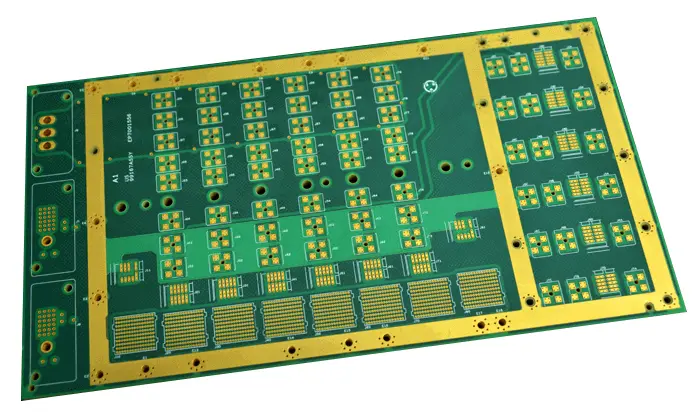
Due to its versatile properties, gold is widely used in many areas of the electronics industry. For example, it serves as an etch resist, a contact suRFace finish for circuit connections, a protective coating, a wire-bonded surface finish, a die attach surface finish, and a solderable coating that provides good soldering properties. When gold is used in soldering processes, there are key points that require special attention. Improper use can have a significant impact on the soldering process and severely affect the properties of the solder joint.
In the past, the average thickness of gold plating was thicker than what was needed for its application. In most cases, the thickness of gold plating is closely related to the application scenario and the plating solution. For harder, finer-grained coatings, appropriate codeposited components, grain-refining additives, and brighteners need to be selected. In general applications, the plating layer is flat, bright, and thin (≦30μ-inches). In other applications, such as die attach areas and wire bonding, the gold plating may not require additional additives because it needs to be rougher and non-glossy, resulting in a thicker plating layer (≧30μ-inches).
In most applications, the thickness of gold plating varies depending on subsequent processes. Thick gold plating is not only used for specific purposes but also sometimes for subsequent tin reflow processes. However, soldering on gold plating with a thickness ranging from 30μ-inches to 100μ-inches can lead to poor soldering or brittleness after soldering. These issues reduce the reliability of solder joints on gold plating. The high costs caused by these unfavorable characteristics and poor reliability led to a decline in the gold plating market, which only improved recently after relevant research reports and impacts were widely discussed.
II. Recovery of Gold
In the past few years, as gold has been widely used in the electronics industry, problems have gradually emerged, especially those related to soldering between solder and gold-plated circuit surfaces, which have attracted significant attention from the industry. In this article, we will discuss the following topics:
- The soldering process on gold plating
- The formation of bonds between the process and the two metals
- Factors to consider in processes that improve joint reliability and extend service life
III. Thickness of Gold Plating
Analysis of the metallographic structure of damaged solder joints shows that the thickness of gold plating is directly related to the reliability of solder joints. Fortunately, most gold plating used on Circuit Boards has a thickness ranging from 5μ-inches to 15μ-inches. For gold plating, it is particularly important to effectively control the plating deposition to produce a thinner layer and reduce pores for the following reasons:
- It enables complete soldering at a lower cost.
- It reduces the risk of brittleness in solder joints after soldering.
- It lowers the probability of pore formation.
- It reduces tin consumption during reflow.
IV. Protection in Soldering
The main purpose of gold plating is to effectively protect the underlying nickel layer. Since soldering actually occurs on the nickel layer beneath the gold plating, the completion of soldering depends on the fusion and adhesion with the nickel layer under the gold plating. For the solder to bond with the underlying nickel layer, the gold layer must be melted during soldering. Therefore, a high-quality gold plating suitable for soldering must be thin, dense, and low-porosity.
After the thin gold layer is melted, the solder will quickly bond with the nickel layer. Thus, the nickel layer must have excellent activity and solderability; otherwise, the gold plating becomes meaningless. In the past, due to misunderstandings about the electroplating process, we often overlooked its importance (see the section "Execution of Gold Plating Process" for details).
Although nickel can be welded with solder, its reaction rate is slower than that of copper. Therefore, more energy is required to complete the welding during soldering. This is crucial for understanding the reaction of solder paste during reflow. Simply put, during reflow, we need to extend the time for the solder to melt into a liquid state to ensure sufficient reaction between nickel and tin.
The completion of the soldering reaction depends on the sufficient reaction at the nickel-tin interface, which forms a continuous intermetallic compound (IMC) layer. This nickel-tin IMC reaction layer not only enables electrical connection between the component and the external system but also provides sufficient strength for the component in the assembly system to resist environmental damage.
V. Execution of Gold Plating Process
Let us consider the soldering issue from another perspective. To ensure good fusion between the nickel layer and the solder, special attention must be paid to the impurity level during nickel layer deposition. In general, the lower the impurity level in the nickel layer, the better. Even for electroless phosphorous nickel deposits, controlling impurity levels is crucial.
Because either codeposition of impurities or occlusion will accelerate the formation of a certain interface in the bonding reaction between two different metals and interfere with the reaction between the two components. Such interference reduces the area available for reactant deposition, weakening the bonding strength between the two components and directly impacting their service life.
Therefore, the electroplating solution must be properly stored and filtered to reduce codeposition and occlusion of contaminants. In the case of electroless phosphorous-nickel, it is particularly important to keep the phosphorus content in the solution within a minimum range. If the phosphorus content in the solution exceeds a certain proportion during nickel deposition, it will hinder nickel layer deposition, making the deposited layer weak and prone to "failure" during soldering.
VI. Brittleness
From the perspective of soldering brittleness, controlling the thickness of gold plating is crucial for soldering because a thin gold layer can effectively reduce the thickness of the gold-tin IMC formed at the interface. In many cases, it is clear that the alloy concentration at the reaction interface is quite high. For thicker gold plating (>20μ-inches), the gold-tin IMC generated during reflow does not disperse uniformly in the entire solder joint structure but causes the two components to separate. In such a separated state, the integrity of the solder joint in areas with high gold concentration is significantly reduced after cyclic thermal excursions.
For solder joints, the flat mating surfaces are most sensitive to reliability. Such interfaces include the area between surface-mounted pads on the circuit board and chip components or gull-wing leaded components.
On larger edges, if the gold plating is too thick (>40μ-inches), it will significantly impact soldering reliability. Observing the solder concentration at the welded edge along the gold-plated surface, we find that the gold-tin IMC mainly forms a complete saturation of confined connection between the surface mount and the gold-plated pads on the circuit board, which greatly affects the reliability of the solder joint.
In past cases, most failures in solder joints occur at the gold-tin IMC layer. Due to the brittleness of the gold-tin IMC, cracks easily form and propagate along the interface between the surface-mount component and the pad, potentially leading to fracture of the joint. It is worth noting that the common feature of crack-prone areas is extremely thin solder in the assembly, which may result from solder loss due to improper component placement.
Sometimes, manufacturers increase the placement pressure of component inserters to ensure good adhesion between components and circuit board pads before reflow, hoping that the components will be deeply embedded in the solder paste. However, this causes the solder paste printed on the circuit board pads to detach from the pads due to excessive pressure, leading to solder loss in this area during reflow. Eventually, a saturated IMC reaction between gold and tin easily occurs on the soldering surface during the soldering reaction. Thus, solder thickness is crucial for specific soldering areas.
Incidentally, during the reaction between solder and the gold layer surface, tin in the solder is easily consumed. Solder with excessive tin consumption solidifies at the interface between the IMC layer, the gold plating, and the solidified solder. In terms of material properties, the IMC layer is hard and brittle, while the area attached to the two interfaces is soft and lead-rich. This fine structure is quite vulnerable to cyclic thermal excursions.
VII. Voids
There are various speculations about the causes of void formation. A special argument is that voids are generated due to the expansion of gas in solids (here, the gold plating surface) during heating, leading to internal voids in the metal, which is related to the gold plating surface. In addition, other commonly mentioned causes of voids include shrinkage and failure to timely remove residual flux.
Voids are usually caused by the massive absorption of organic materials during the soldering reaction between solder and gold plating. Occlusion can occur at any step of metal deposition. Therefore, to effectively reduce void formation, additives must be carefully selected, focusing on whether their grains are refined, wetting agents, and brighteners. Otherwise, organic contaminants will be largely occluded in the metal layer during deposition. These additives can volatilize or dissipate during solder melting and its reaction with gold plating.
For solder, bright-plated deposits act as the source of varying degrees of outgassing, leading to voids in solder joints. The formation of such voids deserves further discussion: when voids escape and move to the flat mating surfaces, due to the small amount and poor mobility of voids in this area, they cannot merge with other voids to increase buoyancy and thus are difficult to escape. The existing voids weaken the entire structure because cracks easily initiate and propagate from the voids, eventually causing fracture of the solder joint. Generally, a thinner gold plating can limit the absorption of organic materials and reduce the probability of void formation.
VIII. Nickel Consumption
After reflow, many IMC reactions occur at the interface of thick gold plating, and correspondingly, a large amount of tin is consumed at the reaction sites. As tin in the solder is consumed, lead becomes the major component in the solder, making the lead-rich area brittle. The concentration of IMC and voids is quite harmful to soldering reliability, so special attention must be paid when dealing with gold-plated surface finishes.
IX. Key Considerations
When using gold-plated pads for soldering in the soldering process, the following key points require special attention:
- The thickness of gold plating must be controlled within the range of 5μ-inches to 15μ-inches.
- Ensure that the nickel layer under the gold plating is solderable. If phosphorous-nickel is used, the phosphorus content must be controlled to the minimum. Generally, the higher the purity of nickel, the better.
- During reflow, the time for solder to melt into a liquid phase should be long enough to ensure sufficient reaction between solder and nickel for complete bonding.
- During gold electroplating, ensure the quality of the electroplating solution, and simultaneously maintain solution filtration, carbonization, and process control.
X. Conclusion
From past experience, secondary reactions often cause destructive damage to material structures. A similar phenomenon is often observed in the failure mechanism of gold-tin solder joints. In the secondary reaction of gold-tin solder joints, a gold-tin IMC layer forms at the interface, which significantly affects the strength of the solder joint and shortens the service life of the system. Thus, soldering on gold-plated pads is a rather complex subject.
Under the premise that the industry continuously demands higher reliability, further understanding of the gold plating structure and strict process control are the only ways. A good process environment can effectively reduce the chance of failures.