
 PCB
PCB FPC
FPC Rigid-Flex
 FR-4
FR-4 HDI PCB
 Rogers High-Frequency Board
 PTFE Teflon High-Frequency Board
 Aluminum
 Copper Core
 PCB Assembly
 LED light PCBA
 Memory PCBA
 Power Supply PCBA
 New Energey PCBA
 Communication PCBA
 Industrial Control PCBA
 Medical Equipment PCBA
 Testing Service
 PCBA Testing Service
 Certification Application
 RoHS Certification Application
 REACH Certification Application
 CE Certification Application
 FCC Certification Application
 CQC Certification Application
 UL Certification Application
 Transformers, Inductors
 High Frequency Transformers
 Low Frequency Transformers
 High Power Transformers
 Conversion Transformers
 Sealed Transformers
 Ring Transformers
 Inductors
 Wires,Cables Customized
 Network Cables
 Power Cords
 Antenna Cables
 Coaxial Cables
 Net Position Indicator
 Solar AIS net position indicator
 Capacitors
 Connectors
 Diodes
 Embedded Processors & Controllers
 Digital Signal Processors (DSP/DSC)
 Microcontrollers (MCU/MPU/SOC)
 Programmable Logic Device(CPLD/FPGA)
 Communication Modules/IoT
 Resistors
 Through Hole Resistors
 Resistor Networks, Arrays
 Potentiometers,Variable Resistors
 Aluminum Case,Porcelain Tube Resistance
 Current Sense Resistors,Shunt Resistors
 Switches
 Transistors
 Power Modules
 Isolated Power Modules
 AC-DC Power Modules
 DC-AC Module(Inverter)
 RF and Wireless
Protection Technology for Etching PCBs with Embedded Resistors
2025-10-08
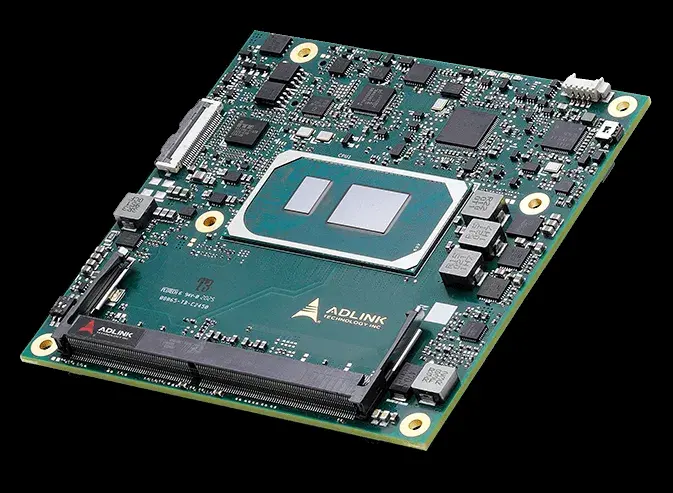
Technical Solutions and Implementation Points for Protecting Resistor Areas When Etching PCBs with Embedded Resistors
1. Core Challenge in Etching PCBs with Embedded Resistors: Protection Contradiction of Resistor Areas
Embedded Resistors (ERs) are resistive components directly integrated into PCBs through processes such as thin-film deposition, thick-film printing, or laser etching, widely used in High-Density Interconnect (HDI) boards, RF modules, and other scenarios. Their core feature is thatresistance accuracy depends on their own material composition and geometric dimensions(e.g., the resistance of nickel-chromium alloy thin-film Resistors is determined by film thickness and line width). However, the core goal of the PCB etching process is to remove copper foil outside the circuit area, which creates a key contradiction: etching solutions (acidic copper chloride, alkaline copper chloride, etc.) are highly corrosive. If they come into contact with embedded resistors, they will cause dissolution of the resistor material (e.g., the corrosion rate of nickel-chromium alloy in acidic etching solution reaches 0.5μm/min) and changes in geometric dimensions, ultimately leading to resistance deviation (the out-of-tolerance rate can be as high as 30% or more) or even complete failure.
Therefore, when etching PCBs with embedded resistors, it is necessary to build a technical system of "precision isolation and full-process protection". It is essential to ensure complete copper foil etching while absolutely preventing etching solution from eroding the resistor area, which is the core prerequisite for ensuring the electrical performance of such PCBs.
2. Core Technical Solutions for Resistor Area Protection: From Material Isolation to Process Control
According to the type of embedded resistors (thin-film, thick-film, printed) and PCB structure (inner-layer embedded, surface-layer embedded), differentiated protection schemes are required, with the core idea of "physical isolation + chemical protection" dual guarantee.
1. Protection Scheme for Thin-Film Embedded Resistors (e.g., NiCr, TaN Thin Films)
Thin-film embedded resistors are extremely thin (usually 0.1-1μm) and more sensitive to etching solutions, requiring double-layer protection of "solder mask ink pre-coverage + special protective adhesive layer":
- Step 1: Solder Mask Ink Pre-Coverage (Basic Isolation)Select etching-resistant flexible solder mask ink (e.g., modified epoxy resin type), which must withstand soaking in etching solution for 30 minutes without swelling or peeling (adhesion ≥8N/cm). Through screen printing or coating process, accurately cover the resistor area with ink, and the coverage range should exceed the resistor edge by 0.2-0.3mm (to prevent etching solution from infiltrating from the edge). The ink thickness is controlled at 15-25μm (too thin is easy to be penetrated by etching solution, too thick affects subsequent processes).
- Curing process: Adopt分段 curing (80℃ pre-baking for 10 minutes → 150℃ curing for 30 minutes) to ensure complete cross-linking of the ink and form a dense protective layer. After curing, it must pass the adhesion test (cross-cut method, 5B level standard) and etching resistance test (soaking in etching solution for 20 minutes without falling off).
Step 2: Special Protective Adhesive Layer (Reinforced Protection)On the surface of the solder mask ink layer, additionally attach a layer of polyimide (PI) protective film (thickness 25-50μm) or coat with UV-curable protective adhesive (e.g., acrylate type). The PI protective film needs to be bonded by hot pressing (temperature 120℃, pressure 0.3kg/cm²) to ensure bubble-free bonding with the solder mask layer; the UV-curable protective adhesive needs to be irradiated under 365nm UV light for 30-60 seconds (energy 800-1000mJ/cm²) to form a wear-resistant protective layer with hardness ≥3H.
Key requirement: The protective adhesive layer must be completely incompatible with the etching solution. When soaked in acidic etching solution (pH 1.5-2.5) at 25℃ for 60 minutes, the weight change rate is ≤0.5%, without dissolution or cracking.
2. Protection Scheme for Thick-Film Embedded Resistors (e.g., RuO₂ Thick Films)
Thick-film embedded resistors are thicker (5-20μm) and relatively corrosion-resistant, but still require "special resistive dry film + edge sealing" protection:
- Step 1: Special Resistive Dry Film CoverageSelect high-temperature resistant and etching-resistant dry film (e.g., DuPont Riston series), which has a residual rate ≥99% after development and can withstand soaking in etching solution for ≥40 minutes. Cover the resistor area with the dry film through vacuum lamination (temperature 110℃, pressure 0.4kg/cm², time 30 seconds), and the coverage range exceeds the resistor edge by 0.3-0.5mm (thick-film resistor edges are prone to gaps, requiring larger coverage margin).
- Exposure and development: Use UV exposure (energy 150-200mJ/cm²) to ensure complete curing of the dry film; during development, use 1% Na₂CO₃ solution (temperature 30℃), and control the development time at 60-90 seconds to avoid over-development leading to peeling of the dry film edge.
Step 2: Edge Sealing TreatmentTiny gaps are easy to form at the junction of thick-film resistors and PCB substrates, which need to be edge-sealed with epoxy sealant (e.g., Loctite 3490). The sealant should be evenly applied along the resistor edge through a dispensing process (dispensing diameter 0.5-1mm), and form a sealing strip with a width of 0.2-0.3mm after curing. The curing condition is 120℃/30 minutes to ensure that the gap is completely filled without bubble residue (can be checked by microscope magnification 50 times).
3. Differentiated Protection for Surface-Layer and Inner-Layer Embedded Resistors
- Surface-layer embedded resistors: In addition to the above basic protection, "spray pressure control" must be adopted during the etching process — the etching solution spray pressure is reduced from the conventional 1.5-2.0kg/cm² to 1.0-1.2kg/cm² to avoid damage to the protective layer caused by high-pressure spraying; at the same time, the spray angle of the resistor area is adjusted to 45° (instead of vertical spraying) to reduce the accumulation of etching solution on the surface of the protective layer.
- Inner-layer embedded resistors: Since they are located inside the PCB, "pre-coverage + isolation layer" protection must be performed on the resistor area before lamination — first cover with solder mask ink, then lay a 0.1mm thick glass cloth (as a physical isolation layer). During lamination, the glass cloth can block the influence of prepreg resin flow on the resistor, and at the same time, during the subsequent etching of the inner-layer copper foil, the glass cloth and the solder mask layer together form a double protection to prevent the etching solution from penetrating into the inner-layer resistor.
3. Key Control Links for Protection Effect: From Pre-Design to Post-Etching Detection
1. Pre-Design: Precise Positioning and Size Reservation of Protection Area
- CAD design annotation: In the PCB design file, the coordinates of embedded resistors (precision ±0.01mm) and the range of the protection area (exceeding the resistor edge by 0.2-0.5mm, determined according to the resistor type) must be clearly marked to ensure precise positioning during subsequent screen printing and lamination, and avoid protection offset (the offset must be ≤0.05mm, otherwise the resistor edge is easy to be exposed).
- Process compensation design: Considering that the protective layer may have slight shrinkage during the etching process (e.g., dry film shrinkage rate ≤0.1%), the size of the protection area must be additionally reserved by 0.05-0.1mm during design to avoid exposure of the resistor edge after shrinkage.
2. Real-Time Monitoring During Etching Process
- Protective layer integrity inspection: Before etching, use an AOI (Automatic Optical Inspection) system (resolution ≥10μm) to check whether the protective layer has defects such as pinholes, bubbles, and edge peeling. The defect rate must be controlled below 0.1%; during etching, take 1 sample every 30 minutes and observe whether the protective layer in the resistor area is intact with a microscope (magnification 50 times). If the protective layer is found to be damaged, the machine must be stopped immediately to adjust the etching parameters (such as reducing the spray pressure and replacing the protective material).
- Etching solution parameter control: The concentration, temperature, and pH value of the etching solution must be strictly controlled to avoid abnormal parameters aggravating the erosion of the protective layer:
- Acidic copper chloride etching solution: Cu²⁺ concentration is controlled at 180-220g/L, temperature 25-30℃, pH 1.8-2.2. Excessively high Cu²⁺ concentration (>220g/L) will increase the solution viscosity, leading to the accumulation of etching solution at the edge of the protective layer;
- Alkaline copper chloride etching solution: Cu²⁺ concentration is controlled at 80-100g/L, temperature 45-50℃, pH 8.0-8.5. Excessively high temperature (>50℃) will accelerate the aging of the protective layer and reduce adhesion.
3. Protective Layer Removal and Resistor Detection After Etching
- Protective layer removal: After etching, a special process must be used to remove the protective layer to avoid residue affecting subsequent processes:
- Solder mask ink/protective adhesive: Soak in 2-3% NaOH solution (temperature 50-60℃) for 10-15 minutes, or use plasma cleaning (oxygen plasma, power 300W, time 60 seconds) to ensure the residual rate ≤0.1%;
- Dry film: Soak in 5% Na₂OH solution (temperature 40℃) for 20-30 minutes, or use a stripper (e.g., DuPont ST-200) to avoid resistor damage caused by violent stripping.
Resistor area detection: Visual inspection: Observe the resistor surface with a microscope (magnification 100 times) for traces of etching solution (such as discoloration and corrosion spots). It is judged as qualified if there are no traces;
Resistance value detection: Use a high-precision multimeter (precision ±0.1%) to measure the resistance value. The deviation from the design value must be controlled within ±1% (precision resistors) or ±5% (ordinary resistors). If the deviation is out of tolerance, analyze whether the protective layer is damaged (check whether the resistor is corroded through section analysis);
Insulation resistance detection: Measure the insulation resistance between the resistor and adjacent circuits, which must be ≥10¹⁰Ω (500V DC) to ensure that the etching solution does not cause a short circuit between the resistor and the circuit.
4. Common Protection Failure Problems and Solutions
In actual production, the protection failure of the resistor area is mostly caused by protective layer defects and process parameter out of control, which need to be investigated and solved in a targeted manner:
| Common Failure Problems | Root Cause | Solution |
|---|---|---|
| Resistor edge eroded by etching solution | Insufficient coverage range of protective layer; bubbles/gaps exist at the edge, allowing etching solution to infiltrate | Expand the coverage range of the protective layer to exceed the resistor edge by 0.5mm; use vacuum process during lamination/coating to eliminate bubbles; add edge sealant |
| Protective layer falls off during etching | Insufficient adhesion between protective layer and substrate; excessive etching solution temperature/spray pressure | Perform plasma cleaning on the substrate surface before etching (power 300W, time 60 seconds) to improve adhesion; reduce etching solution temperature by 5-10℃ and spray pressure by 0.3-0.5kg/cm² |
| Resistance value deviation out of tolerance (no visible corrosion) | Tiny pinholes exist in the protective layer, allowing trace penetration of etching solution, leading to slight dissolution of the resistor material | Select protective materials with higher density (such as pinhole-free dry film); add resistance value screening process after etching to eliminate out-of-tolerance products |
| Inner-layer embedded resistor corroded | Prepreg resin flow damages the protective layer during lamination; etching solution penetrates into the inner layer during inner-layer etching | Add glass cloth isolation layer before lamination; use low-concentration etching solution for inner-layer etching (Cu²⁺ concentration reduced by 20%) and shorten the etching time |
5. Compliance and Reliability Verification of Technical Solutions
1. Compliance Basis
The above protection scheme complies with the protection requirements for embedded components in IPC-2221 (PCB Design Standard) and IPC-6012 (PCB Performance Standard), among which:
- The etching resistance of the protective layer must meet IPC-TM-650 2.3.25 standard (etching solution soaking test, no corrosion);
- The resistance value deviation must comply with the requirement of "precision embedded resistors ±1%, ordinary resistors ±5%" in IPC-7093 (Embedded Components Standard).
2. Reliability Verification
The long-term reliability of the protection scheme is verified through accelerated aging tests:
- High-temperature and high-humidity test: Store the etched PCB in an environment of 85℃/85%RH for 1000 hours, and the resistance value change rate is ≤±2%;
- Temperature cycle test: Cycle 1000 times between -40℃ and 125℃, with each cycle lasting 30 minutes, and the resistance value change rate is ≤±3%;
- Chemical resistance test: Soak in chemicals commonly used in subsequent PCB processes (such as flux and cleaning agent) for 24 hours, with no obvious change in resistance value and no peeling of the protective layer.