
 PCB
PCB FPC
FPC Rigid-Flex
 FR-4
FR-4 HDI PCB
 Rogers High-Frequency Board
 PTFE Teflon High-Frequency Board
 Aluminum
 Copper Core
 PCB Assembly
 LED light PCBA
 Memory PCBA
 Power Supply PCBA
 New Energey PCBA
 Communication PCBA
 Industrial Control PCBA
 Medical Equipment PCBA
 Testing Service
 PCBA Testing Service
 Certification Application
 RoHS Certification Application
 REACH Certification Application
 CE Certification Application
 FCC Certification Application
 CQC Certification Application
 UL Certification Application
 Transformers, Inductors
 High Frequency Transformers
 Low Frequency Transformers
 High Power Transformers
 Conversion Transformers
 Sealed Transformers
 Ring Transformers
 Inductors
 Wires,Cables Customized
 Network Cables
 Power Cords
 Antenna Cables
 Coaxial Cables
 Net Position Indicator
 Solar AIS net position indicator
 Capacitors
 Connectors
 Diodes
 Embedded Processors & Controllers
 Digital Signal Processors (DSP/DSC)
 Microcontrollers (MCU/MPU/SOC)
 Programmable Logic Device(CPLD/FPGA)
 Communication Modules/IoT
 Resistors
 Through Hole Resistors
 Resistor Networks, Arrays
 Potentiometers,Variable Resistors
 Aluminum Case,Porcelain Tube Resistance
 Current Sense Resistors,Shunt Resistors
 Switches
 Transistors
 Power Modules
 Isolated Power Modules
 AC-DC Power Modules
 DC-AC Module(Inverter)
 RF and Wireless
How to Optimize Resonance Frequency Control of RF PCB Through Simulation
2025-04-13
Controlling the resonance frequency of RF PCB is crucial for ensuring circuit performance and signal integrity. By optimizing through simulation, designers can predict and adjust resonance frequencies during the design phase, improving efficiency and product quality. Below are detailed steps and methods:
-
Establish an Accurate Circuit Model
- Use simulation tools (such as ANSYS, Keysight ADS, XDS, etc.) to import PCB design files, ensuring the model includes all relevant components, layer information, and geometric structures.
- Determine the simulation area and use cutting tools to isolate the target path to improve simulation efficiency.
-
Run Simulations and Obtain Initial Results
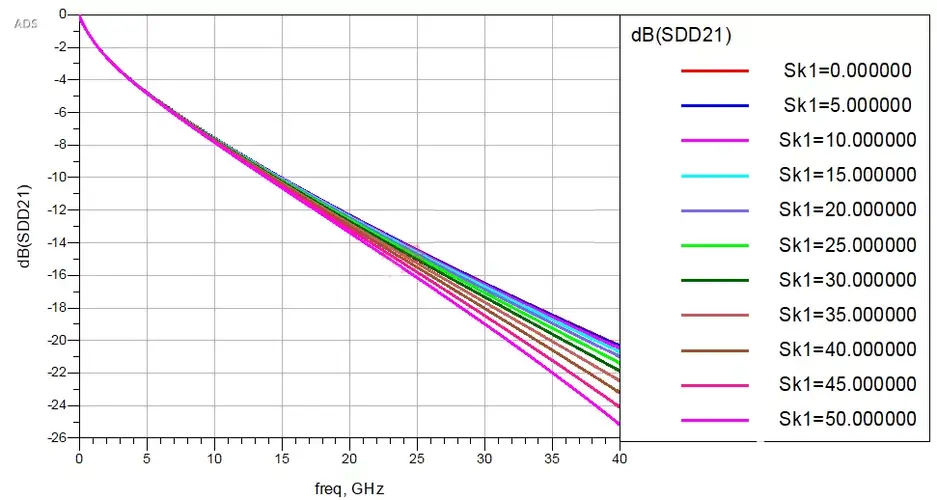
- Perform electromagnetic field simulations to obtain S-parameters and network frequency responses.
- Analyze resonance frequencies and identify their impact on overall performance in the current design.
-
Analyze Key Parameters
- Identify parameters influencing resonance frequency, including inductance, capacitance, trace length, width, dielectric constant, and loss factor.
- Use parametric optimization Modules to adjust these parameters and observe their effects on resonance frequency.
-
Apply Optimization Algorithms
- Utilize optimization functions in simulation tools (such as Parametric optimization, Optimization target optimization, DOE sensitivity analysis, etc.) to systematically adjust key parameters.
- Set objective functions (e.g., minimize frequency offset, maximize bandwidth) and run optimization algorithms to find the best parameter combinations.
-
Validate and Iterate
- Validate the optimized design through simulations to ensure resonance frequency meets design goals.
- Iterate based on simulation results to progressively approach the ideal design.
-
Consider Multiphysics Effects
- Analyze the impact of electromagnetic interference, thermal effects, and mechanical stress on resonance frequency.
- Introduce multiphysics coupling models in simulations to ensure stability in real-world applications.
-
Handle Manufacturing Tolerances and Material Variations
- Perform statistical analysis (e.g., Yield statistical analysis) to evaluate the effects of manufacturing tolerances and material variations on resonance frequency.
- Optimize designs to improve robustness and reduce frequency offsets during manufacturing.
-
Generate Reports and Documentation
- Document the simulation process, optimization results, and design adjustments for future reference in design and manufacturing.
- Generate detailed simulation reports, including resonance frequency, bandwidth, insertion loss, and other key performance indicators.