
 PCB
PCB FPC
FPC Rigid-Flex
 FR-4
FR-4 HDI PCB
 Rogers High-Frequency Board
 PTFE Teflon High-Frequency Board
 Aluminum
 Copper Core
 PCB Assembly
 LED light PCBA
 Memory PCBA
 Power Supply PCBA
 New Energey PCBA
 Communication PCBA
 Industrial Control PCBA
 Medical Equipment PCBA
 Testing Service
 PCBA Testing Service
 Certification Application
 RoHS Certification Application
 REACH Certification Application
 CE Certification Application
 FCC Certification Application
 CQC Certification Application
 UL Certification Application
 Transformers, Inductors
 High Frequency Transformers
 Low Frequency Transformers
 High Power Transformers
 Conversion Transformers
 Sealed Transformers
 Ring Transformers
 Inductors
 Wires,Cables Customized
 Network Cables
 Power Cords
 Antenna Cables
 Coaxial Cables
 Net Position Indicator
 Solar AIS net position indicator
 Capacitors
 Connectors
 Diodes
 Embedded Processors & Controllers
 Digital Signal Processors (DSP/DSC)
 Microcontrollers (MCU/MPU/SOC)
 Programmable Logic Device(CPLD/FPGA)
 Communication Modules/IoT
 Resistors
 Through Hole Resistors
 Resistor Networks, Arrays
 Potentiometers,Variable Resistors
 Aluminum Case,Porcelain Tube Resistance
 Current Sense Resistors,Shunt Resistors
 Switches
 Transistors
 Power Modules
 Isolated Power Modules
 AC-DC Power Modules
 DC-AC Module(Inverter)
 RF and Wireless
Solder Mask Opening-to-Pad Size Matching Standards: A Comprehensive Analysis
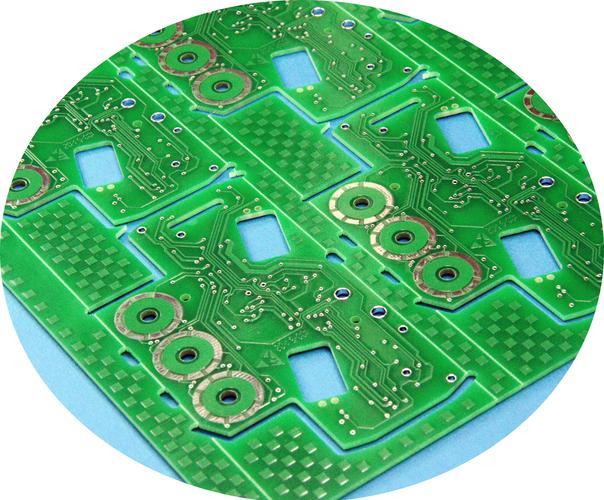
The dimensional matching between solder mask openings (SMO) and pads is critical in Pcb Design, directly impacting soldering yield, electrical reliability, and long-term stability. The core principle is: SMO must be larger than pads to compensate for manufacturing tolerances, but excessive enlargement risks bridging or impedance mismatch. This article details the matching standards and technical basis.
1. Core Principles of Size Matching
-
Base Compensation:
-
General Standard: SMO expanded by 0.05–0.15mm (2–6mil) per side, with 0.1mm (4mil) being the industry norm.
-
Purpose: Covers positional deviations (±0.025mm) during exposure, development, and baking to prevent solder mask coverage on pads.
-
-
Design Software Logic:
-
Pad and SMO sizes are usually identical in library creation; CAM tools or EDA software (e.g., Altium, Cadence) auto-expand SMO by 0.1mm in Gerber output.
-
Special components (e.g., BGA) require manual compensation to avoid default rule failures.
-
2. Size Standards by Process
| Process | SMO Expansion | Application | Key Constraints |
|---|---|---|---|
| Liquid SCReen Printing | 0.4mm/side | Low-density, cost-sensitive | Poor ink fluidity demands larger compensation9 |
| Photoimaging (LPI) | 0.15mm/side | HDI/Flex boards | High precision; 0.3% shrinkage requires 0.004mm pre-compensation |
| Laser Direct Imaging (LDI) | 0.05mm/side | 0.2mm-pitch BGA | Exposure accuracy ±0.015mm; compensation formula: Δ=K×(1+CTE×ΔT) |
Note: Flexible PCBs require additional lamination error compensation (SMO-to-copper distance ≥0.15mm), with single openings ≤30mm to prevent wrinkles.
3. Requirements for High-Density Components
-
Fine-Pitch BGA (0.2mm pitch):
-
Pad Diameter: 0.1mm (4mil); SMO diameter: 0.15mm (0.05mm expansion).
-
Failure Boundaries:
-
Undersized SMO: Cold joint rate ↑23%, solder strength ↓40%;
-
Oversized SMO: Bridging risk ↑40%, impedance deviation >8%.
-
-
-
Solder Mask Bridge Criteria:
-
Bridges require pad spacing ≥0.4mm (minimum width 0.075–0.1mm).
-
For spacing <0.4mm, remove SMO at IC pad corners to ensure mask connectivity.
-
-
Thermal Pads & Gold Fingers:
-
Thermal pads: Full opening with vias for heat dissipation;
-
Gold fingers: SMO aligned with the top edge and extending beyond the board bottom; ≥0.5mm clearance to adjacent copper.
-
4. Failure Analysis and Control of Size Deviation
-
Risks of Undersized SMO:
-
Solder mask on pads → Poor wettability; cold joint rate ↑5×;
-
Bridge fractures → Moisture-induced corrosion.
-
-
Risks of Oversized SMO:
-
Solder bridging (↑40% risk for fine-pitch ICs);
-
Impedance mismatch (>8% deviation), degrading high-frequency signal integrity.
-
-
Mitigation Strategies:
-
Design Stage: Balance copper layers (A/B side difference <10%); add teardrops at pad-trace junctions;
-
Manufacturing Stage:
-
Dynamic compensation: Base 0.005mm + real-time process variation (0–0.003mm);
-
3D laser microscopy (0.1μm precision) + dual-threshold AOI (strict: ±0.005mm; acceptable: ±0.008mm).
-
-
5. Design Implementation Guidelines
-
Standard Library Rules:
-
SMD pads: SMO expansion 0.1mm/side; solder mask bridge width ≥ 0.075mm;
-
Vias: Tent vias (negative expansion) in bend areas; non-bend areas may open but require ≥0.3mm to cover film.
-
-
High-Density Board Optimization:
-
Step 1: Select low-shrinkage ink (curing shrinkage <0.2%);
-
Step 2: Adopt LDI over traditional exposure, reducing deviation by 60%;
-
Step 3: Add 0.003mm edge compensation (counteracts thermal deformation).
-
-
Verification Process:
-
DFM simulation: Check SMO-pad alignment (e.g., HQDFM)6;
-
First-article test: Measure wetting angle (<90°); X-ray verify BGA voiding <15%.
-
Conclusion
Solder mask opening-to-pad matching balances precision, reliability, and cost:
-
General Use: 0.1mm/side expansion balances solderability and process tolerance.
-
High-Density Boards: Shrink to 0.05mm (e.g., 0.2mm BGA), relying on LDI and dynamic compensation.
-
Core Logic: SMO must exceed pad size, but expansion must be dynamically adjusted based on substrate CTE, ink properties, and component density.
As 01005 components and 0.3mm-pitch BGAs proliferate, micron-level compensation (±0.003mm) and AI-driven prediction will become the next-generation PCB's core competencies.