
 PCB
PCB FPC
FPC Rigid-Flex
 FR-4
FR-4 HDI PCB
 Rogers High-Frequency Board
 PTFE Teflon High-Frequency Board
 Aluminum
 Copper Core
 PCB Assembly
 LED light PCBA
 Memory PCBA
 Power Supply PCBA
 New Energey PCBA
 Communication PCBA
 Industrial Control PCBA
 Medical Equipment PCBA
 Testing Service
 PCBA Testing Service
 Certification Application
 RoHS Certification Application
 REACH Certification Application
 CE Certification Application
 FCC Certification Application
 CQC Certification Application
 UL Certification Application
 Transformers, Inductors
 High Frequency Transformers
 Low Frequency Transformers
 High Power Transformers
 Conversion Transformers
 Sealed Transformers
 Ring Transformers
 Inductors
 Wires,Cables Customized
 Network Cables
 Power Cords
 Antenna Cables
 Coaxial Cables
 Net Position Indicator
 Solar AIS net position indicator
 Capacitors
 Connectors
 Diodes
 Embedded Processors & Controllers
 Digital Signal Processors (DSP/DSC)
 Microcontrollers (MCU/MPU/SOC)
 Programmable Logic Device(CPLD/FPGA)
 Communication Modules/IoT
 Resistors
 Through Hole Resistors
 Resistor Networks, Arrays
 Potentiometers,Variable Resistors
 Aluminum Case,Porcelain Tube Resistance
 Current Sense Resistors,Shunt Resistors
 Switches
 Transistors
 Power Modules
 Isolated Power Modules
 AC-DC Power Modules
 DC-AC Module(Inverter)
 RF and Wireless
Exploring the Unique Charms and Applications of Thick Copper PCB Boards
Exploring the Unique Charms and ApplICations ofThick Copper PCB Boards
In the vast landscape of the electronics manufacturing industry, PCB boards serve as the cornerstone of circuit systems, with their peRFormance and specifications directly impacting the efficiency and reliability of final products. Among the myriad of PCB board types, thick copper PCB boards stand out with their distinctive advantages, particularly in scenarios demanding high power, high current, and efficient heat dissipation, playing an indispensable role.

Definition and Characteristics
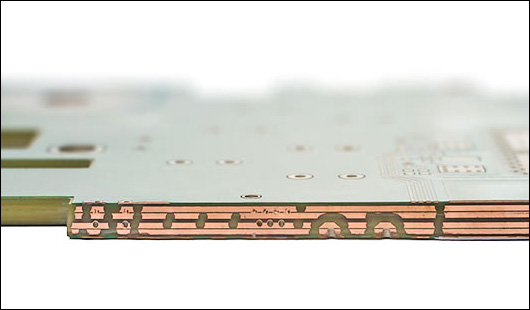
Generally speaking, the copper thickness of standard Pcb Boards commonly found in the market ranges from 1 ounce to 3 ounces. In contrast, thick copper PCB boards, or heavy copper PCB boards, refer to those with a copper layer thickness exceeding 4 ounces (i.e., 140 microns). This characteristic endows thick copper PCB boards with significant advantages in conductivity, heat dissipation capabilities, and current-carrying capacity.
Application Fields and Functions
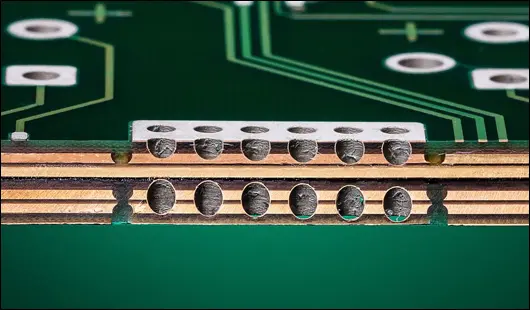
Thick copper PCB boards are widely utilized in various power systems and power electronic devices. Their robust current conduction capabilities effectively support the stable operation of high-power circuits. Additionally, the increased copper weight within the board significantly enhances heat dissipation performance, helping to reduce circuit operating temperatures and prolong equipment lifespan. Structurally, double-sided or multi-layer thick copper PCB boards feature a more compact design, achieving a harmonious blend of high density and simplicity.
Technical Features and Advantages
As a specialized type within the PCB board domain, thick copper PCB boards exhibit unique characteristics in conductive materials, substrate selection, production processes, and application scopes. Through optimizing plating processes, manufacturers can increase copper weight on through-hole sidewalls and plated-through holes. This innovation not only reduces the number of board layers but also conserves precious board space. The application of thick copper plating technology ingeniously integrates high-current transmission with control circuits, offering more possibilities for the design of complex electronic systems.
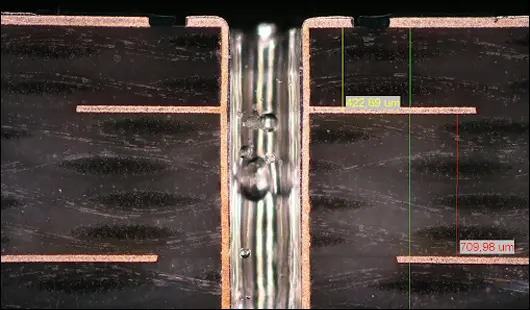
From a performance standpoint, thick copper PCB boards significantly enhance current-carrying capacity, strengthen the board's resistance to thermal stress, optimize heat dissipation effects, and increase the mechanical strength of connectors and PTH holes. Furthermore, by reducing layers and optimizing layouts, thick copper PCB boards contribute to the miniaturization of products, catering to the extreme pursuit of space utilization in modern electronic devices. Nowadays, thick copper PCB boards have become indispensable materials in crucial fields such as power modules and automotive electronic components.
With advanced production equipment and a professional technical team, Minintel is dedicated to providing high-quality thick copper PCB board solutions to customers worldwide, driving the electronics manufacturing industry towards an even brighter future.