
 PCB
PCB FPC
FPC Rigid-Flex
 FR-4
FR-4 HDI PCB
 Rogers High-Frequency Board
 PTFE Teflon High-Frequency Board
 Aluminum
 Copper Core
 PCB Assembly
 LED light PCBA
 Memory PCBA
 Power Supply PCBA
 New Energey PCBA
 Communication PCBA
 Industrial Control PCBA
 Medical Equipment PCBA
 Testing Service
 PCBA Testing Service
 Certification Application
 RoHS Certification Application
 REACH Certification Application
 CE Certification Application
 FCC Certification Application
 CQC Certification Application
 UL Certification Application
 Transformers, Inductors
 High Frequency Transformers
 Low Frequency Transformers
 High Power Transformers
 Conversion Transformers
 Sealed Transformers
 Ring Transformers
 Inductors
 Wires,Cables Customized
 Network Cables
 Power Cords
 Antenna Cables
 Coaxial Cables
 Net Position Indicator
 Solar AIS net position indicator
 Capacitors
 Connectors
 Diodes
 Embedded Processors & Controllers
 Digital Signal Processors (DSP/DSC)
 Microcontrollers (MCU/MPU/SOC)
 Programmable Logic Device(CPLD/FPGA)
 Communication Modules/IoT
 Resistors
 Through Hole Resistors
 Resistor Networks, Arrays
 Potentiometers,Variable Resistors
 Aluminum Case,Porcelain Tube Resistance
 Current Sense Resistors,Shunt Resistors
 Switches
 Transistors
 Power Modules
 Isolated Power Modules
 AC-DC Power Modules
 DC-AC Module(Inverter)
 RF and Wireless
WiFi Module
WiFi Modulesare embedded modules that convert serial port or TTL levels into signals compliant with WIFI wireless network communication standards. Below is a detailed explanation of WiFi Modules:
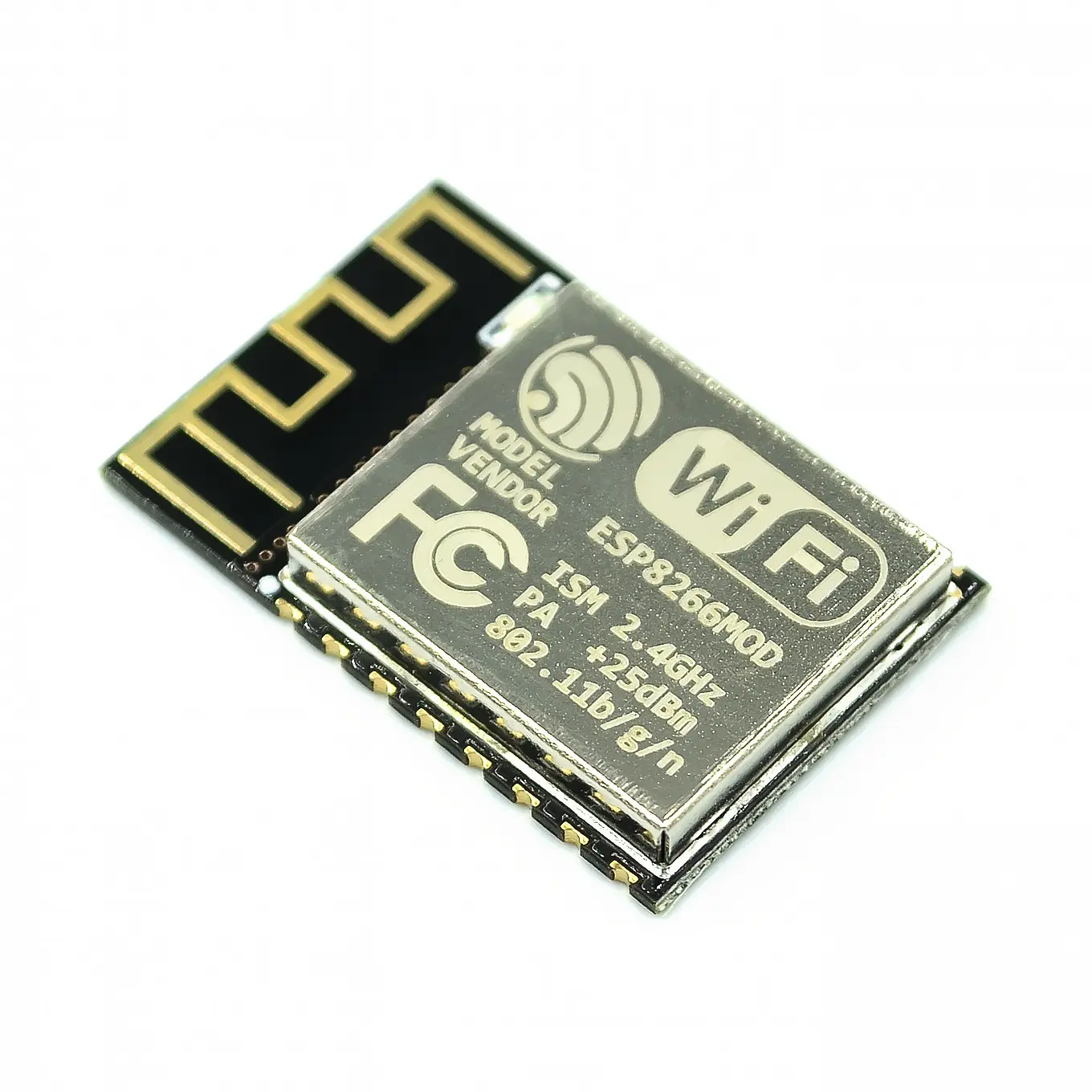
I. Definition and Function
Definition: WiFi Modules are core hardware in the transmission layer of the Internet of Things (IoT), capable of converting serial port or TTL levels into signals that meet WiFi wireless network communication standards, thereby enabling wireless data transmission.
Function: They are equipped with the IEEE802.11b/g/n protocol stack and TCP/IP protocol stack for wireless networks, supporting various network transmission protocols such as TCP/UDP/HTTP/MQTT. With WiFi Modules, traditional hardware devices can directly connect to the Internet, enabling wireless smart homes, M2M, and other IoT applications.
II. Main Classifications
Universal WiFi Modules: Such as USB or SDIO inteRFace modules used in mobile phones, laptops, and tablets. These modules are typically used in mobile and portable devices, with the WiFi protocol stack and drivers running within the operating system.
Router-based WiFi Modules: Typically represented by household routers. These modules usually have substantial Flash and RAM resources and run a Linux operating system for building and managing wireless networks.
Embedded WiFi Modules: These modules are used in embedded systems, such as 32-bit microcontrollers. They are equipped with WiFi drivers and protocols, with interfaces such as UART for general MCU connections.
III. Working Principle
Sending End: Converts data to be sent into signals suitable for wireless transmission through physical layer modulation, encoding, and other processing. The signal is then amplified and processed by the RF front-end module before being emitted through the RF antenna.
Receiving End: Received wireless signals are captured by the RF antenna, amplified, and filtered by the RF front-end module. After demodulation, decoding, and other processing by the physical layer, the signal is converted back into the original data.
IV. Application Fields
Smart Homes: WiFi Modules enable smart home devices to connect to the Internet for remote control, intelligent linking, and other functions.
Industrial IoT: WiFi Modules are used for wireless communication between devices in the Industrial IoT for data collection, monitoring, and management.
Medical Equipment: In the medical field, WiFi Modules facilitate data transmission and remote monitoring between medical devices.
Consumer Electronics: Consumer electronics products such as smart speakers and smart TVs connect to the Internet via WiFi Modules, providing a rich array of online services and content.
V. Main Features
High-speed Transmission: WiFi Modules support high-speed wireless data transmission, meeting the needs of various application scenarios.
Low Power Consumption: With technological advancements, WiFi Modules maintain high performance while achieving low power consumption designs, extending device lifespan.
Easy Integration: WiFi Modules offer a variety of interfaces and protocol support, facilitating integration with other hardware and software.
Safe and Reliable: WiFi Modules support multiple wireless network encryption methods, such as WEP64/WEP128/TKIP/CCMP(AES) WEP/WPA-PSK/WPA2-PSK, ensuring secure transmission of user data.